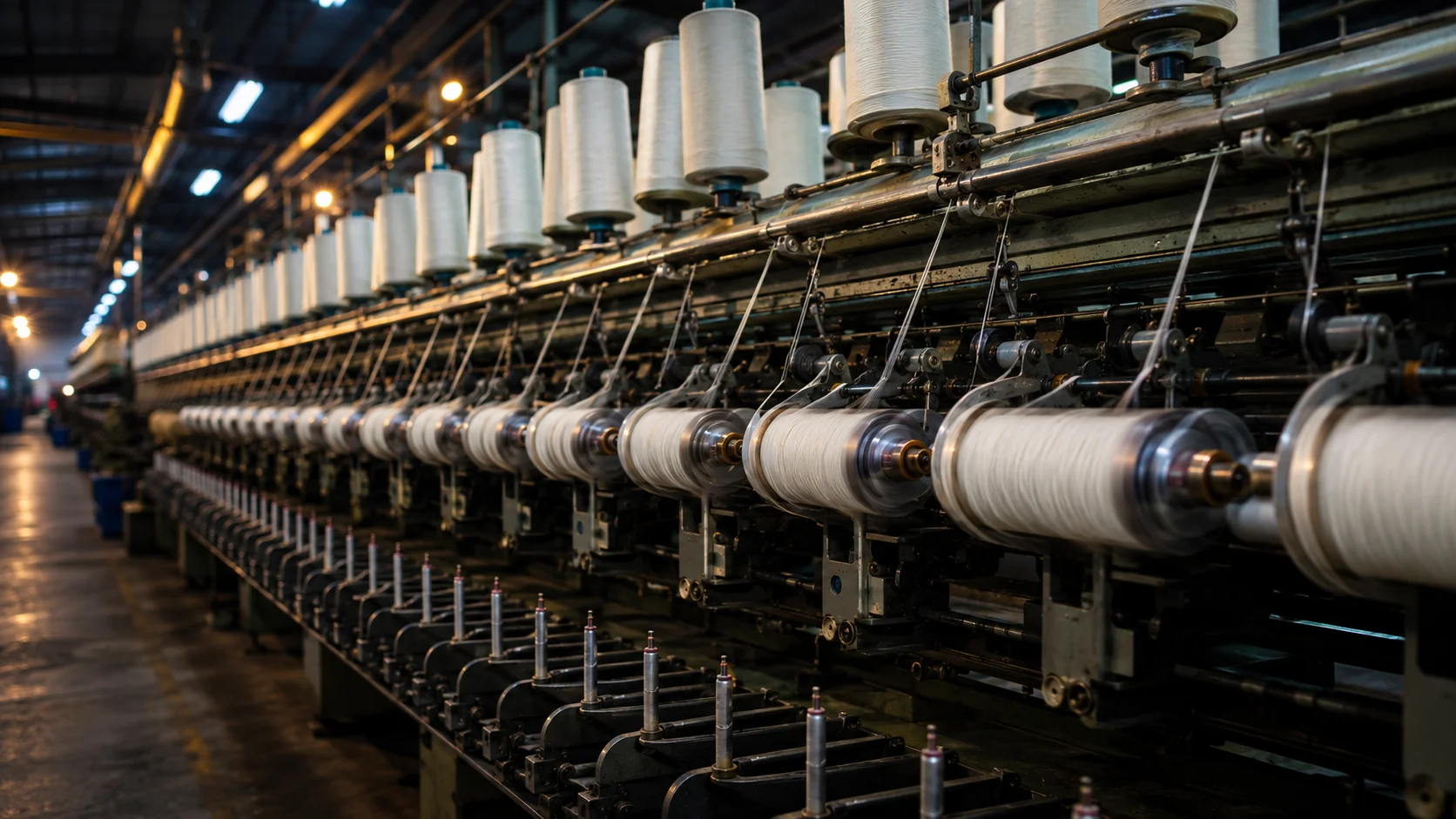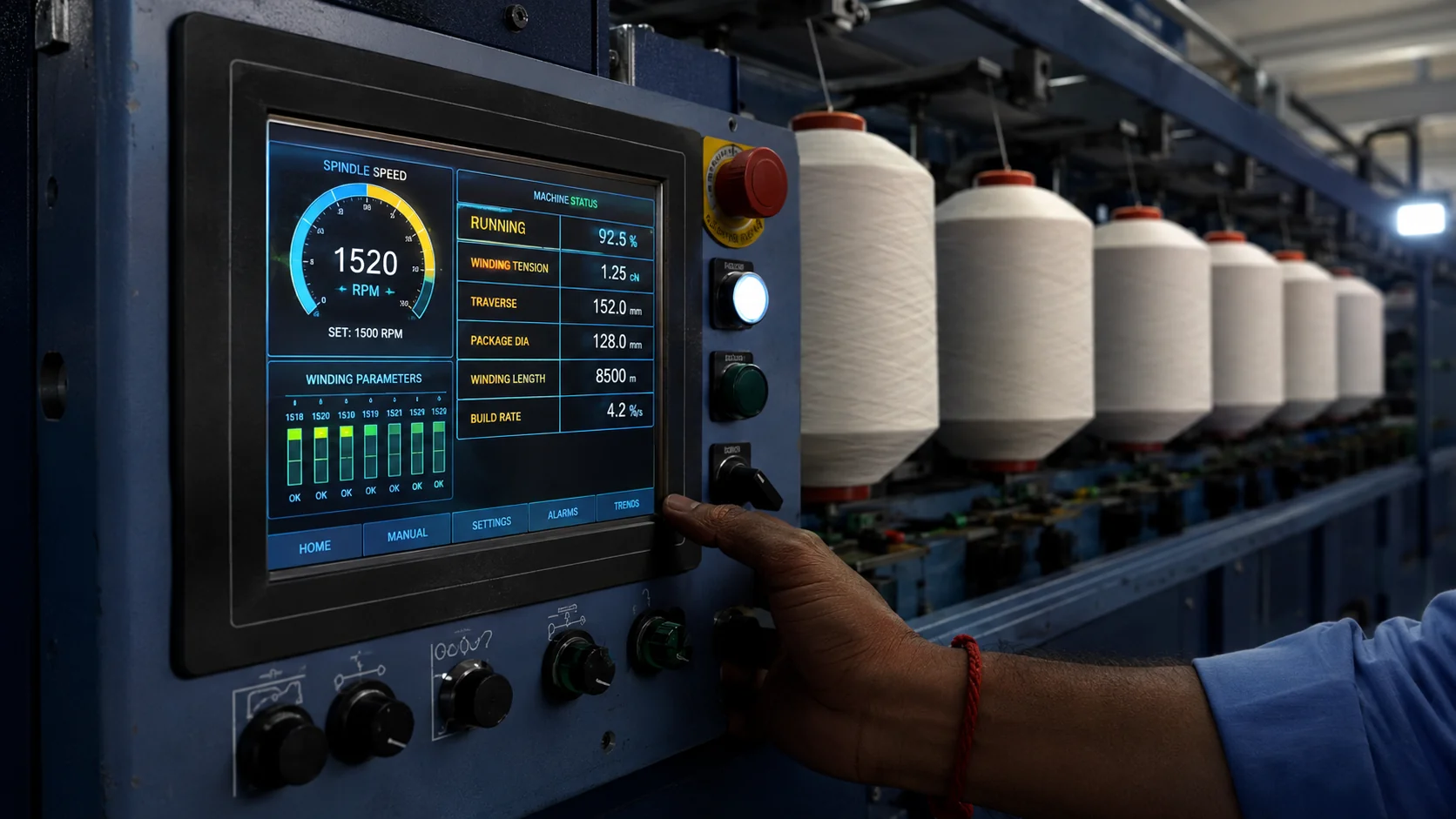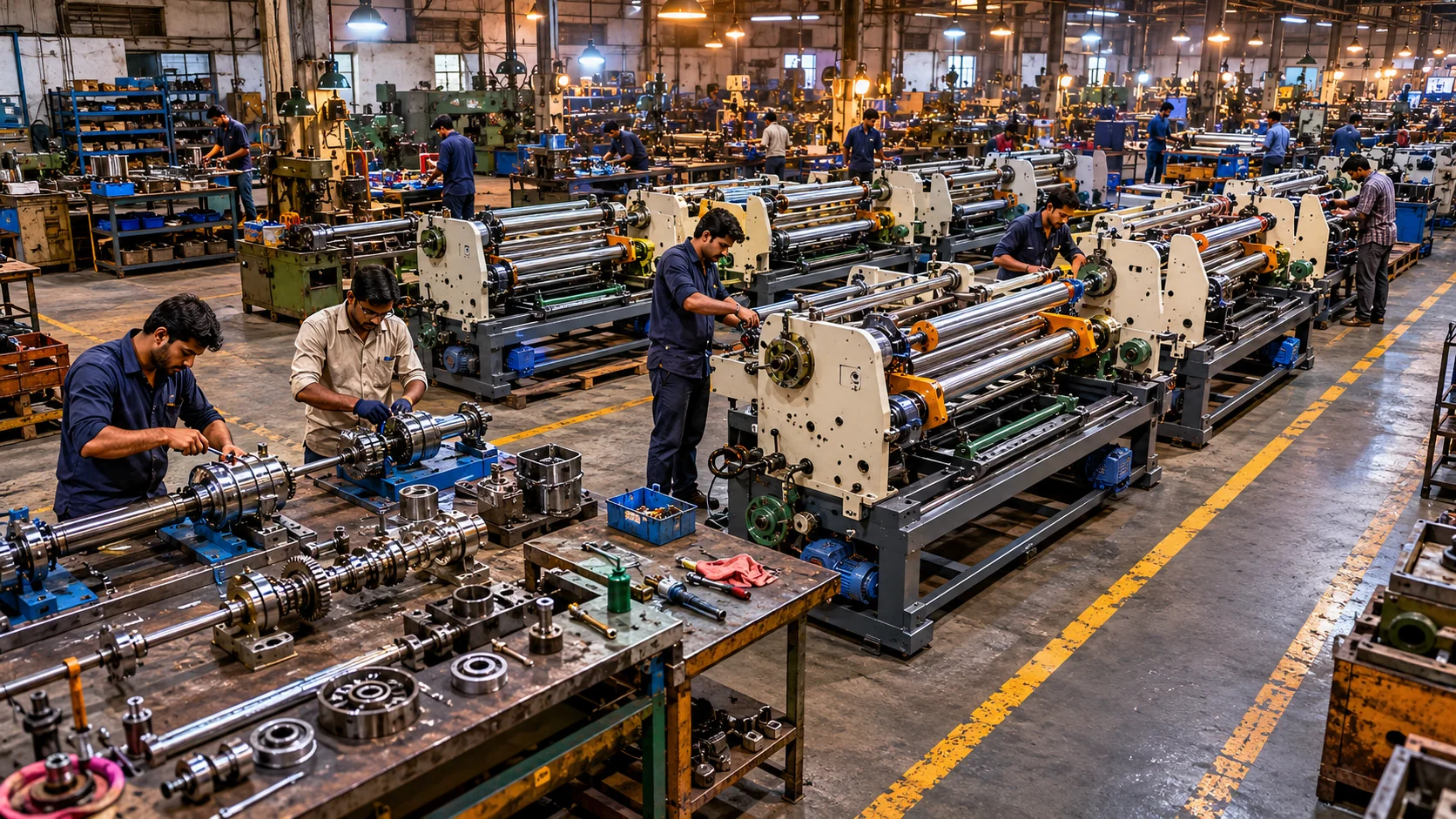
When textile mill owners in Coimbatore, Ludhiana, or Dhaka go looking for a cone winding machine, a significant number of the suppliers they find trace back to the same city: Ahmedabad. This is not a coincidence. The concentration of textile machinery manufacturing in Gujarat — and in Ahmedabad in particular — is the result of more than a century of industrial history, and it has practical consequences for mills buying machinery today.
How Ahmedabad Became the Manchester of the East
Ahmedabad's association with textiles begins in the mid-19th century, when the city's merchants — many from the Lohana and Bania trading communities — began investing in mechanised cotton spinning and weaving. The first mill opened in 1861. By the early 20th century, Ahmedabad had dozens of large mills and had earned the moniker "Manchester of the East" from British trade observers.
Where large-scale textile production concentrates, machinery manufacturing follows. Ahmedabad's early mills imported their equipment from Britain and Germany. Over time, local entrepreneurs began fabricating replacement parts, then components, then complete machines. By the mid-20th century, a domestic textile machinery industry had formed — initially serving the city's own mills, then selling to mills across India.
RJK Group (Kinarivala Machinery Traders Pvt. Ltd.) was established in Ahmedabad in 1945, at a point when this transition from import-dependence to domestic manufacture was well underway. The company's founding generation had direct experience with how mills in Gujarat used and maintained winding equipment, and that operational perspective shaped how the machines were designed.
The Industrial Ecosystem That Sustains It
Ahmedabad's textile machinery manufacturing cluster is not just a collection of individual companies. It is an ecosystem: precision engineering workshops, castings and forgings suppliers, electrical components distributors, PLC and automation specialists, and a skilled workforce in mechanical and electrical trades — all within the city or close to it.
This matters for the quality and cost of the machines that come out of Ahmedabad. A manufacturer sourcing components locally can maintain tighter quality control over its supply chain, respond faster to engineering changes, and keep costs lower than a manufacturer relying on distant or imported components. It also means the manufacturer's service engineers are familiar with the entire machine, not just the assembly process.
What This Means for Mills Buying Machinery
Faster delivery and no import logistics
A machine ordered from an Ahmedabad manufacturer ships by road across India. There is no port clearance, no import duty, no freight forwarding, and no currency risk. Lead times are measured in weeks, not months. For a mill that has identified a production bottleneck and needs to address it quickly, that difference is significant.
Local spare parts without lead time risk
Because the manufacturers and their component suppliers are in the same city, spare parts inventories can be replenished quickly. When a mill needs a non-standard part or a component for an older machine, the manufacturer can draw on Ahmedabad's precision engineering base to fabricate it — often within days.
Service proximity for Gujarat and western India
For mills in Gujarat — Surat, Rajkot, Vadodara, Bhavnagar — buying from an Ahmedabad manufacturer means buying from a neighbour. Service engineers can reach most Gujarat locations in a day. This is not a trivial advantage: the difference between a two-day and a two-week service response on a critical machine is measured in production output and customer commitments.
Customisation without communication barriers
When a mill needs a machine configured to non-standard spindle counts, yarn counts, or production sequences, working with a local manufacturer means the engineering discussion happens in the same language, timezone, and business culture. Modifications that would take weeks of international email correspondence can be resolved in a single meeting.
Looking for a Winding Machine Manufacturer in Ahmedabad?
RJK Group has manufactured textile winding machinery in Ahmedabad since 1945. Talk to our team about your spindle count, yarn type, and production requirements.
Get in TouchRJK Group's Role in That History
With over 80 years of manufacturing in Ahmedabad, RJK Group is one of the longer-established textile machinery manufacturers in the city. The company's product range — cone winders, doubler and ply winders, and hand splicers — reflects the winding and post-spinning segment of the machinery market, where Ahmedabad manufacturers have historically been strongest.
More than 300,000 spindles bearing the RJK nameplate are operating in mills across India and in 15+ export markets, including Bangladesh, Indonesia, Kenya, Nigeria, and Sri Lanka. The machines running in a mill in Nairobi or Chittagong today were engineered and assembled in Ahmedabad, serviced by a team that knows every component, and supported by a spare parts network that can respond overnight.
That is what 80 years of manufacturing in one place builds: not just production capacity, but accumulated knowledge of how yarn behaves, how mills operate, and what breaks when it should not.
Frequently Asked Questions
Why is Ahmedabad known for textile machinery manufacturing?
Ahmedabad's textile machinery industry grew out of its 19th century cotton mill economy. As the city became a major spinning and weaving centre, local manufacturers began producing machinery to serve the mills — first components, then complete machines. Today Ahmedabad is India's leading centre for winding machinery and several other textile equipment categories.
What types of textile machinery are manufactured in Ahmedabad?
Cone winding machines, doubler and ply winders, hand splicers, TFO twisting machines, warping machines, sizing equipment, and loom accessories. The concentration is particularly strong in winding and twisting equipment.
Is it better to buy textile machinery from a local manufacturer in India?
For standard winding applications, buying locally avoids import duty, freight, and logistics complexity; offers faster delivery and service; and provides local spare parts support. Indian manufacturers deliver comparable output quality to European imported machinery at substantially lower total cost.
Does RJK Group export textile machinery outside India?
Yes — to mills in Bangladesh, Indonesia, Sri Lanka, Nepal, Kenya, Nigeria, Egypt, Turkey, and other markets, with the same lead times and technical support as domestic orders.
How long has RJK Group been manufacturing textile machinery in Ahmedabad?
Since 1945 — over 80 years. RJK Group's cone winders and winding machines have been in continuous production since the 1970s, with 300,000+ spindles installed across India and internationally.